

In 2025, ERP is a business’s new must-have, as ERP needs to be considered more than a back-office function. Today’s
advanced ERP works by providing real-time business solutions that anticipate changes in inventory, alert to financial
risk, and ultimately provide insightful information uniquely to your business, and all in real-time. AI-powered
intelligent integration with predictive analytics and automation allow today’s ERP software solution for business
intelligence (BI) to move from passive tracking-and-reporting module to active decision-making strategy developer.
If you’re in the position of looking at solutions for ERP for your business, let’s consider the big question: When
do you connect intelligence with disruptive outcomes?
What Is Business Intelligence (BI)?
Data collection to decision making: The importance of AI-driven BI
ERP systems enhance business operations with centralized features for finance, HR, sales and inventory. Today’s business
asks more than information. AI-powered business intelligence converts the Data warehouse into a perfect decision-making
tool. Reduced the waiting time for monthly reports, allowing managers to access live dashboards that project insights
and required actions. The new BI features empower the business to move ahead of yesterday. The team members get the
right instructions to drive tomorrow’s success.
Business Intelligence in ERP is aimed at assisting you to analyze the productivity of human resource. You can take
corrective measures to ensure their satisfaction with work. As a result, the overall efficiency and productivity of your
company gets increased.
When business intelligence is used in ERP, it can monitor the performance to get your company an edge over competitors.
Here we mention some top business benefits of BI in ERP.
Big Benefits of Business Intelligence in ERP

BI can play a vital role in ERP systems. As companies generate vast amounts of data every day, ERP software can process
it to generate actionable insights with the help of BI. Here are the key benefits of a tailored ERP software solution
for business intelligence.
Predictive Analytics & Forecasting
Now, ERPs use the past data and machine learning to predict sales, demand, and any possible operational breakdowns, thus
shortening the waiting time for the stock to be replenished and the surplus of inventory shelved.
Smart Automation
AI now handles tasks that were manual once – for example, report generation, scheduling, or purchasing. Hyper automation
is the combination of technology, such as robotic process automation (RPA) and machine learning, that enables the flow
of activities between different departments to be faster and save time, and be more efficient.
Personalized, Real-Time Dashboards
Visual dashboards adapt to the users, presenting the most important KPIs for them, while the embedded analytics permit
further investigation within the usual ERP interfaces. Moreover, dashboards can have features such as being interactive,
collaborative, and voice-enabled through NLP.
Enhanced Performance Tracking
Business Intelligence (BI) in Enterprise Resource Planning (ERP) assists firms in real-time monitoring and improving the
usage of resources, along with the productivity of employees, and even customer satisfaction metrics.
Improved Customer Service
With the help of ERP and BI, businesses become aware of the changes in the requirements of the customers, the surges in
demand can be predicted, and the support made more personalized will be done quicker than before.
Superior Data Security & Compliance
Artificial Intelligence (AI) powered ERPs are now securing data without the need for any external help, thus monitoring
for compliance and detecting anomalies; in this way, they are helping companies stay ahead of changing privacy
regulations and threats.
Simply put, both BI and ERP software can enhance each other’s performance. For example, the reporting feature of the ERP
software can be more advanced, accurate, and reliable with the help of BI. Let’s see other examples of the integration
of BI with ERP software.
The Growing Impact of ERP with Business Intelligence Across Industries
The ERP consolidation with BI is altering the operational flow of organizations today in virtually every industry
imaginable in an ever-changing business environment. From the manufacturing plant to the retail grocery shelf, from
hospitals to banks and freight stations. With brand-new ERP systems integrating AI, machine learning, and predictive
analytics, the world of ERP is offering new levels of technology to make easier, smarter decisions and operational
excellence. Now more than ever through real-time information access, data-driven intelligence use, and automation,
businesses can optimize processes, anticipate obstacles, reduce total costs, and heighten the customer experience.
Manufacturing: Machine learning-driven predictive maintenance identifies potential equipment breakdowns, thereby
cutting the time that the machine remains out of service and the costs, while supply chain optimization facilitates
procurement to be more in line with the expected needs.
Retail & E-Commerce: Artificial intelligence records the buying habits of customers, executes the sales
activities without the involvement of the staff, and adjusts the stocks to the market requirements in a matter of
minutes to always be in the highest responsive.
Healthcare: BI dashboards collect enormous amounts of data concerning patients and healthcare management, thus
encouraging accurate clinical decision making and meeting the standards for healthcare regulations.
Finance: ERP analytics facilitate real-time tracking of transactions, allow for the detection of fraudulent
activities, and create financial models for cash inflows and outflows, thereby equipping finance departments with better
and speedier management capabilities.
Distribution & Logistics: ERP analytics facilitate real-time tracking of transactions, allow for the
detection of fraudulent activities, and create financial models for cash inflows and outflows, thereby equipping finance
departments with better and speedier management capabilities.
You May Also Like: AI ERP Integration- Top Benefits and Challenges You Need to Know
Future of BI in Enterprise Resource Planning Software
An ERP software solution for business intelligence can help businesses manage their core processes, such as accounting,
manufacturing, and sales. Thanks to the BI system, better analysis of the collected data becomes possible to make
insightful decisions. As technology evolves both ERP and BI will become even more compatible. This is because data
analytics will play an even bigger role in shaping business strategy in the future. Decision-makers will increasingly
count upon real-time insights for managing operations.
On one hand, ERP systems eliminate data silos, and on the other hand, BI allows decision-makers to combine knowledge and
join forces as they work toward common goals. We can, therefore, expect that ERP and BI will promote greater
collaboration among different teams.
Implementation Challenges and Smart Solutions
While the rewards of intelligent ERP are high, the path can be complex:
1. Data Integration
Drifting from legacy software to a modern cloud-first ERP system needs strong integrations. And data control tools. This
assures seamless connection across systems. A data governance tool is significant to maintain precision while the
migration procedure is performed. Businesses carefully need to assess data flows and design protocols for real-time
access.
2. Change Management
Resistance is a common reaction to the implementation of AI-driven ERP systems, especially by those users who are used
to traditional workflows. In order to have a successful changeover, the main works of the agencies concentrate on
comprehensive training programs, designing user-friendly interfaces, and promoting a culture of user empowerment – thus
helping the staff not only to learn the system but also understand how it can facilitate their work.
3. Customization & Scalability
By 2025, the foremost ERP solutions will be products of versatile design, featuring low-code customizations, component
add-ons, and even hybrid cloud integration for support of businesses with particular or dynamic requirements. They will
be able to adjust themselves to situations that are exceptions to the traditional one-fits-all method, no matter if they
are businesses that are growing fast or working in very specific areas.
4. Cybersecurity
AI-based compliance testing, anomaly detection, and role-based access controls, collectively, constitute solid digital
castles—a must-have for the industries that hold very sensitive data, such as the financial sector, healthcare, and
defence. These smart safeguards not only ensure that the regulations are followed but also actively detect threats and
implement very strict access control rules, thus reducing the risk in the complicated digital ecosystems.
Key Trends Shaping ERP & Business Intelligence
- Agentic AI & Autonomous Systems: AI agents are able to activate workflows, complete transactions, and suggest changes without the need
for human intervention; hence, professionals can concentrate on strategy. - Embedded & Conversational Analytics: Analytical thinking has been embedded into ERP work processes, and such thinking is accessible through
chatbots, voice queries, or direct dashboards; thus, it is collaborative and democratized, meaning that
anyone can use it. - Continuous Intelligence: Though ERP/BI systems are perpetually monitoring, they are only able to give suggestions, alerts, and
prescriptive actions very quickly in real-time, as well as not just after an event, thus, they are
limited to a few hours after the incident. - Industry-Specific Solutions: With the support of analytics and the features of compliance that are tailored, the new platforms are
equipped for industries like construction, healthcare, and production.
Future Outlook – ERP, BI, and AI in the Next Decade
As technology accelerates, ERP platforms will shift from assisting to autonomously executing, offering scenario planning
and real-time operational changes. The collaboration between humans and artificial intelligence will be better than
before: machines will handle the monotonous work and humans will provide the creative and strategic part.
Moreover, ecosystems are getting more interactive: ERPs are not only linked with CRM but also with supply chain, HR, and
customer support platforms; hence, there are no data silos, and it is possible to have a one-stop shop for information.
Concluding Remarks
With ERP and business intelligence integration, businesses can move beyond optional features. Today’s AI-enabled ERP
systems combine predictive analytics, automation, and real-time dashboards. This integration helps companies maintain
market leadership. Moreover, businesses adopting smart ERP and BI systems build a strong foundation for sustainable
long-term growth.
FAQs About ERP software solution for business intelligence
integrates data analytics to optimize business processes and aid decision-making.
generating actionable insights for better decision-making.
intelligence?
enhanced forecasting, data-driven decision-making, and streamlined processes.
and compliance with industry regulations to safeguard sensitive information.
intelligence?
inventory levels, production metrics, and customer insights.
tools, ensuring data flow and analysis across platforms.
More Resources About ERP System

In the year 2025, understand that digital transformation is happening quicker than ever before. SAP Digital transformation is now one of intelligent reinvention. Many companies have adopted SAP as part of their digital transformation to drive organization-wide data intelligence, create better experiences, and ultimately increase productivity.
This guide looks at the important role SAP plays in driving a successful and engaging digital transformation. The goal is to cover the basics from outlining the importance of SAP and the SAP transformation framework, to barriers and misconceptions. Where some organizations see digital transformation as a means to improve technology, SAP sees this as the next natural step in evolution. Digital transformation, for SAP, is about using digital capabilities to allow teams to creatively apply their assets, data, and people.
We will also explore how SAP is disrupting the status quo with technology such as Cloud ERP, AI and machine learning (ML), and Robotic Process Automation (RPA), why these technologies matter and how they ultimately help organizations achieve intelligent enterprises.
What Is Digital Transformation?
Digital transformation involves more than new technology: it fundamentally rethinks business models and processes, as well as the entire customer experience. Some goals are to connect workflows, utilize automation, and utilize data to impact productivity and revenue. Organizations can implement many improvement opportunities, allowing companies to have more agility and responsiveness in today’s market. Digital tools enable companies to be more agile and responsive to the larger market. Moreover, Digital transformations provide a digital foundation for SAP that can connect critical processes, use data to drive real-time analytics and AI-driven insights to enhance decision-making speed, and drive immediate performance and long-term growth.
- Digital transformation reveals opportunities to elevate competitive positioning within the industry while providing a new and superior customer experience.
- Technology is just a part of the equation, so are people and data!
- It doesn’t matter the business or industry; it has a meaningful impact on the culture and values of the organization.
Analytics Adoption Forecast
- Only about 30% of companies successfully navigate technology change through digital transformation
- Nearly half of companies 49% say AI is already fully integrated into their core business strategy.
- Over 97 % of businesses have invested in big data, but only around 40% are using analytics effectively.
It is the end-to-end digital enterprise architecture offered by the SAP Digital Transformation Framework. This architecture and the next-generation features are built on a unified platform that is enterprise-ready, flexible, and trusted, and they completely connect the front-end and back-end operations through a strong digital core. The IT environment is significantly simplified by this digital enterprise architecture, which also offers an extendable foundation for future business innovation. The digital core serves as the connecting point between your company operations to produce a living, dynamic, and adaptable digital business that enables you simply the business processes.
Importance of Digital Transformation in Today’s Business
It is becoming clear for companies that in order to grow and compete, businesses need to improve resilience, competitiveness, and responsiveness; as such, it is clear that companies looking to grow and compete need to improve resilience, sharpen competitiveness, and improve responsiveness. Customers increasingly expect hyper-personalized service, expedited fulfillment, and seamless digital experiences. As a result they must modernize of the widespread technology ecosystem, from supply chain processes to customer-facing platforms, while also needing to rethink legacy business models and strategies. The question is no longer about whether they can go digital to survive, but how quickly they can reinvent themselves to thrive.
According to McKinsey’s 2025–26 Digital Transformation Index, 71% of executives are speeding up digital initiatives over the past two years, but only 15% feel they are capturing the full value from their efforts. Almost 60% expect their current business models to become obsolete by 2030, without significant reinvention, with 72% identifying AI integration as the most important priority. Gartner reports that 53% of enterprises are adopting AI-first strategies while 46% are transforming their organization to a fully cloud-native organization by 2027.
Within a decade, 50 to 70 percent of today’s Fortune 500 companies could disappear if they don’t embrace AI and digitization at full speed.” – John Chambers
What Are The Challenges in Digital Transformation

Lack of an SAP Business Transformation Strategy
Without a set strategy, and SAP digital transformation project cannot be successful. Know what has to be upgraded and where your organisation may be enhanced, and then start there. Therefore, it is better to have a plan in place before getting putting hands.
Improper IT Skills
You’ll need a knowledgeable, effective IT workforce if you want your SAP digital transformation efforts to be successful. And putting that together is challenging, particularly given the present shortage of expertise. Organizations have difficulties due to a lack of expertise in data analytics, application architecture, software integrations, cybersecurity, and data transfer.
Security concerns
Online attacks mostly target unprotected businesses, shoddy setups, and system weaknesses. When undergoing your SAP Digital Transformation, be sure to have a plan in place to proactively minimise these hazards. Make sure that your SAP digital transformation partners are capable enough to set up everything with the utmost security and can prevent any type of attack during the process.
Budget Constraints
Investment in digital transformation is not inexpensive. However, scope creep can gradually start to delay deadlines and add new work for firms with a less-than-stellar transformation plan, all of which raises the cost of a project. So make sure to find out what your long-term objectives are and what return on investment you hope to get from your transformation process.
Start your Digital Transformation Journey and Implement SAP with your Business

How SAP Enables Digital Transformation
SAP S/4HANA Cloud is the heart of digital transformation for the enterprise, delivering a digital core that reincorporates business processes and analytics into a reinvented cloud model that connects ecosystems for all the major functional areas in your enterprise. SAP S/4HANA Cloud offers the flexibility of modular deployment and subscription licenses, meaning you can deploy it how you want it (cloud) and you can choose a subscription model that makes sense for your business. Organizations will experience next-gen reporting with real-time analytics, which will streamline automation, provide intelligent insights, and produce customers better reports.
By incorporating supply chain, finance, procurement, and HR into a single platform, there is less duplication of efforts and wasted work, resulting in higher productivity and agility; organizations will be a more agile business that will have the ability to respond and action quickly as the market evolves and innovate.
- It is immediate – always-on in-memory computing provides improved analytics with real-time information, allowing business users to act.
- It is intelligent – predicts insights that extend far beyond automation; it delivers a way to convert data into actionable information related to innovation.
- It is integrated – it connects all the departments of an organisation and creates seamless connectivity into the outside world including IoT, Big Data, mobile, business networks, third-party systems, and more.
SAP Business Technology Platform (BTP): The Innovation Engine
SAP is a critical player in digital transformation across many different industries. Companies are using SAP systems to streamline operations and integrate systems, thus, driving growth potential. Each transformation journey will be different, but the benefits are common efficiency, innovation, and responsiveness. SAP also has a variety of functions and modules; it’s important to work with SAP experts to select the appropriate processes for your business and to ensure that employees are trained to use changing applications.
Why SAP is Central to the Journey
Now this transformation is being driven by SAP Business Technology Platform (BTP) which is a multi-cloud environment and is part of the next generation of SAP. SAP BTP includes everything you need to connect, extend, and create applications that connect and integrate between SAP and non-SAP tools and make your entire digital landscape more intelligent and responsive.
With SAP BTP, businesses can:
- Connect, extend, and create modern business applications that extend across SAP and non-SAP environments, increasing productivity and decreasing the barriers to innovation
- Unleash professional and citizen developers through low-code and no-code platforms, and modern generative AI application development.
- Make ideas concrete with precision build out innovative systems built to exact specifications of businesses needs.
- Utilize robotics process automation (RPA) and machine learning (ML) to bring intelligent automation into operations for unparalleled speed and precision.
- Transform workflows and utilize advanced technology to perform routine tasks painlessly, providing quick access to accurate data, so that the organization can direct its energy towards growth.
- Take advantage of integrated data access to deliver rich insights, digital innovation, and the automation process that transform how business is done.
SAP BTP has premade integration packs for finance, HR, procurement, and supply chain and uses AI-integrated automation technology that could reduce testing time by up to 30%. It seems evident that SAP BTP is fast becoming the ideal choice for organizations looking for flexibility, innovation, and speed.
Every industry and every organization will have to transform itself in the next few years. What is coming at us is bigger than the original internet and you need to understand it, get on board with it and figure out how to transform your business. – Tim O’Reilly, Founder, and CEO
Achieving Integration with SAP Digital Transformation Framework
Deliver a successful digital transformation strategy by following the 5 below-mentioned key steps.
Check your company’s current state
The first step in determining your business capability is to assess your current assets and business systems. Assessing your competitors, market, and present position within it are also important at this time. The more complete your understanding of your company is, including its current advantages and disadvantages, the more equipped you will be to make the most intelligent choices about technology and SAP business transformation.
Identify top goals and fast wins for better decision-making
We are aware that digital transformation is a process and does not take place instantly. However, business and team leaders should have a bottom line and must quickly show the benefits of a SAP business transformation. Finding business procedures that could lead to the best increase in profit (or decrease in loss) or the most significant increase in customer satisfaction and growth is definitely the best path to be selected.
Establish attainable KPIs
Key performance indicators (KPIs) give any firm a framework for cultural and technological change. KPIs connect specific and achievable milestones and targets to your digital transformation program in place of overarching objectives like “be more resilient” or “increase productivity.” It’s crucial to start out by being realistic when defining KPIs.
Prioritize the adaptability for digital transformation change
When it comes to digital transformation strategy- silos, poor communication, and short-sighted planning are more problematic than actually integrating the technologies themselves. Traditional corporate hierarchies frequently have enormous blind spots that prevent them from seeing the entire organisation as a whole. Opposite to this, highly networked organisations are better equipped to act rapidly, adapt to changing conditions, and are likely to be more robust.
Establish a map and work with experienced individuals
A roadmap gives a clear vision of the SAP digital transformation framework that helps businesses focus on opportunities and launch new systems and processes as quickly and seamlessly as possible.
Make sure your SAP implementation partner provides services to help you create and carry out your specific road map. This entails working with you to streamline your company procedures and find fresh business models in addition to assisting you in integrating your new software and solutions.
SAP Digital Transformation Benefits
 Every level and function in a company can be integrated through SAP digital transformation. Intelligent technologies provide businesses with the fundamental resources they need to succeed. Here are some potential impacts of SAP transformation:
Deeper insights for informed and real-time decision-making
For many businesses, assessing performance and ROI has often been a TIME-TAKING process. By the time data is gathered, processed, and manually analysed, it gets too late. With a modern ERP system and advanced analytics, businesses can see real-time data and customise powerful analysis algorithms to make the best decision at the moment.
Faster and improved customer experiences
Customers want to have their needs handled on their terms, not yours. You can meet their constantly shifting expectations by using personalization, omnichannel access, customised service plans, and real-time data access, which will also boost leads, encourage retention, and reward loyalty.
Drives innovation in business models
It is no secret that a greater emphasis is being placed on business model innovation as a strategy of value creation in response to shifting consumer and market needs. However, businesses must have the capacity to collect and analyse real-time data, establish automated and intelligent processes to handle new business, payment, and service models, along with upgrading basic business models and customer experiences- which can be smoothly done with SAP business transformation.
Enhances competitiveness and company’s growth
Businesses that use SAP digital transformation to enhance their operations and improve services are able to streamline future business growth strategies including creating new goods and services, and bringing in and keeping new leads, and consumers, among other things.
Also Read: Importance of SAP Business One for fast-growing businesses
Work With Trusted SAP Partner to Deliver New Business Value
With a deeper knowledge of SAP solutions, Silver Touch can assist our clients in undergoing a digital transformation with SAP, unlocking significant business innovations and opening up fresh growth prospects that help them outpace the competition. We build business processes more quickly with SAP Business One consultant, which leads to simpler client interactions. Get the white-glove treatment and highest level of SAP service support that only a few official SAP implementation partners can provide. With the help of enterprise intelligence, our team of more than 50+ professionals works closely with businesses to ensure that they get along with SAP technology easily. Working with official partners will help you run your business more efficiently, quickly, and effectively.
Conclusion: SAP for Digital Transformation
SAP offers an advanced cloud ERP system that seamlessly integrates AI and automation. The sole focus is not only attaining the business requirements; SAP prepares the business with significant tools to flourish in a cut-throat competitive landscape by 2025 and beyond. Digital transformation outperforms not only technological upliftment but also signifies the strategic unlocking of business agility, boosting innovation, and embodies mere technological advancements; it embodies the strategic unlocking of business agility, fostering innovation, and developing stability, all crucial details for creating a modern enterprise.
SAP Digital Transformation FAQs
More Resources

In 2025, AI is becoming the norm, and companies are detecting the pressing need to use more intelligent solutions.
And yes, it’s true, inventory management systems such as SAP Inventory Management that allow for simpler, faster, and better systems that can keep
pace with our rapidly changing marketplace. As the selling process becomes more complicated with multichannel and
direct to consumer (D2C) selling methods, not to mention continuing supply chain challenges, doing inventory
management right is more important than ever. Therefore, all businesses must begin looking for systems that are
real-time, allow for automation, and that can scale with them.
According to research, 96% of Best-in-Class growing organizations (the top 20% of performers) have used an
Enterprise Resource Planning (ERP) solution. With these solutions, companies across the spectrum can overcome
obstacles by implementing a single business system that supports visibility, efficiency, and decision-making. ERP
technology is a core business technology that makes your life easier.
SAP Business
One (SAP B1) was designed to respond to these new needs. It will not only help organizations streamline
product fulfillment, maintain supply chain stability, and better service customers, it will also accomplish these
functions better through its centralized, AI powered system. Furthermore, SAP B1 can be deployed either on-premise
or in the cloud, and can respond to your operational needs.
According to research, 96% of Best-in-Class growing organizations (the top 20% of performers) have used an
Enterprise Resource Planning (ERP) solution. With these solutions, companies across the spectrum can overcome
obstacles by implementing a single business system that supports visibility, efficiency, and decision-making. ERP
technology is a core business technology that makes your life easier.
In this article, we will describe the
main features of SAP Inventory Management as well as its benefits to both SMBs and enterprise businesses.
What is SAP Inventory Management?
The standard practice of controlling inventory flow is known as inventory management. It consists of various
processes. These processes include
ata Monitoring
It involves collecting information on inventory levels for various items and changes in these levels during multiple
periods.
Data Interpretation
It is known as generating action items or actionable insights based on the collected data for making real-time
decisions.
Execution based on Action Items
It includes assigning actionable insights to the team and executing the strategy to maintain the inventory levels.
Here it is fair to mention that all these three processes are discrete and businesses need to perform one process at
a time to get the best outcome. For example, you need to gather all the data first and then start its
interpretation. Finally, you can execute your strategy based on data interpretation.
Usually, businesses have different teams for managing these processes effectively. SAP Business One inventory
management software can lend a helping hand in managing all three processes separately yet simultaneously in your
team. You can easily implement the overall management strategy with SAP B1 management through proper coordination
and collaboration.
Let’s go through some of the most common challenges of inventory management.
The New Era of Inventory Management: Challenges and Requirements
Real-Time Tracking
No more slow-moving, error-filled spreadsheets. With no real-time tracking of raw materials and finished-goods
inventory, you risk stock-out situations, overstocking inventory, and missing out on sales. Smart inventory
management solutions provide the ability to track in real-time so you can have instant visibility to help you take
action sooner rather than later.
Effective Supply Chain & Order Flow
When procurement, production, and finance operate in isolated silos it’s only a matter of time until there is a
delay. The process slows down even more with manual order management. Integrated systems ensure that you have
connected systems, so orders flow quickly through procurement and production, with fewer errors and more satisfied
customers.
No More Overstocking or Shortages
Overstocking ties up your working capital and too little stock costs you sales. The right inventory management
system strikes the right balance between supply and demand. With the right inventory management solution, can always
keep the right amount of inventory to keep profits maximized and consumers satisfied.
Smarter Decisions for Your Supply Chain Management
AI-driven demand forecasting will help stay a step ahead by predicting exactly what your customers are going to
need. With predictive analytics, you can avoid supply chain issues before they happen — ensuring that your business
runs like a well-oiled machine no matter what.
Use Hybrid Efficiency
Traditional systems cannot achieve the speed and automation that modern businesses require. Hybrid solutions combine
proven reliability and advanced automation, enabling you to achieve scalable and efficient inventory control across
warehouses, stores, and online.
For businesses looking to grow sustainably, an intelligent ERP option is a must – such as SAP Business One – to
allow them to be more customer-centric, resilient, and future-ready when operating.
Do you know?
Over 82,000 Customers are Running SAP Business One Worldwide
Companies in over 170 countries rely on SAP Business One in 27 languages to help their companies grow fast,
drive profit, and run simple
How SAP Business One Elevates Inventory Management in 2025

1. Real-Time Inventory Visibility and Accuracy
SAP Business
One delivers real-time inventory updates for warehouses, retail, and online sales, which dramatically
reduces errors and minimizes the effects of stale data. Features like batch and serial tracking take you to the next
level with improved traceability, product quality, and compliance tracking. All of this inventory accuracy enables
businesses to balance supply and demand, and keep inventory of just the right amount while avoiding unnecessary or
wasted inventory.
2. AI-Powered Inventory Automation and Demand Forecasting
Using AI and
machine learning lists, SAP Business One assesses demand based on sales history, seasonal patterns, and any
market transitions. A key benefit is the ability to issue automated purchase orders based on pre-defined stock
thresholds. This capability reduces manual work, avoids stockouts, and helps ensure that the replenishment cycle is
optimized for supply chain costs and stability.
These components intensify supply chain stability, regulating costs while avoiding out-of-stock situations a crucial
edge in today’s volatile markets.
3. Multiple channel and D2C Integration
SAP Business One eliminates phantom stock across a diverse inventory landscape by connecting information from your
online, retail, and D2C (direct-to-consumer) capabilities, reflexively improving shareability across the order
fulfillment process. More importantly, SAP Business One has multiple ways to automate stock transfer and minimize
unnecessary movements, to guarantee that you deliver without stockpiling or taking on excessive stock, and to
satisfy demand.
4.Multi-Warehouse and Location Management
SAP Business One provides visibility of stock levels, stock movement, and location-specific policy in the case of
multi-location operations. Automated transfers and flexible stocking and stocking methods enhance logistics, reduce
costs, and enhance the efficient operation of a business in different regions.
5.Warehouse Automation and Mobility
By leveraging bar code scanning, RFID, and mobile devices to receive, pick, and pack stock, SAP Business One
streamlines and optimizes productivity, significantly reducing errors. The result is improved efficiency, faster
delivery time, and accurate stock records.
Transform your Business & Achieve Extraordinary 360° Value with SAP ERP Solution
Benefits SAP Inventory Management System
Inventory management capabilities of SAP Business One assist businesses to streamline their inventory-related
procedures effectively. SAP inventory management module offers many benefits to companies while enabling them to
convert the inventory management process into a highly efficient and strategic part of their core operations.
Here are the top benefits of the SAP B1 inventory management system that contribute to optimizing inventory
management.

Optimized Process
Pinpoint accuracy and real-time change in status are some of the key characteristics of the SAP inventory management
module. It can take the entire process to a new level with more accuracy and a better experience. Distribution
companies, wholesale distributors, and even large-scale retailers can optimize both inventory and supply chain
management processes using this module.
Improved Stock Management
One of the major issues companies face is inefficiency in monitoring stock movement. Thanks to the SAP inventory
system, you can easily track what comes in and what goes out on a regular basis. The system also provides you with
proper documentation and you can easily manage fluctuations in stock levels and pricing. The dashboard shows stock
levels in real-time and you can get the benefit of improved stock management.
Real-time Inventory Data
This is one of the biggest benefits of the SAP inventory system. For example,You can readily track every item in
your inventory. When any item came, where it was stored, and when it left the inventory- all this data can be
collected and analyzed with SAP Business One software. Whether your staff is in an office, warehouse, or even at a
remote place, it is possible to get access to real-time inventory data.
Better Planning
Any company, irrespective of the industry type, needs proper planning for raw materials and other requirements. It
is essential for organizations that their raw materials remain at optimum level so that they can avoid the unwanted
stock-out situation. However, most businesses or companies cannot afford to do manual exercise every day for
measuring the raw material. There, the SAP Business One inventory management tool can lend a helping hand.
It assists organizations with both planning and purchasing raw materials while setting up reorder points based on
the data related to material usage. This can certainly help companies avoid excessive stock and expensive purchases
of materials.
Accurate Reports
SAP B1 inventory management system has built-in reporting tools like SAP Crystal Reports that provide users with
accurate and comprehensive reports for production and warehousing departments. Accuracy in reports can assist
business persons to estimate the purchase and inventory for the future and reduce losses in revenue.
Enhanced Fulfillment
Proper inventory management is useful in speeding up fulfillment and improving the delivery process. It saves a lot
of time for businesses and assists you to offer better services to your customers. As a result, you can give your
customers
an excellent experience through a hassle-free purchase process and timely delivery. You can also save additional
costs related to stockout and other unwanted situations.
Advantage of Cloud
Cloud-based deployment of SAP inventory management system can give you the facility of updating documents and
managing important processes in both online and offline manners effectively. Deployment in the cloud also enables
your employees to access the necessary data anytime and from anywhere using their smart devices for making instant
decisions.
You May Also Like: How SAP Business One can Help in
Manufacturing Industries?
The Future-Proof Advantage of SAP Business One in 2025
SAP Business One is more than inventory software. This advanced system reduces the complexities of multichannel
growth, solves the challenges of multichannel growth, supply chain anticipation, and customer expectations for
on-time delivery. The combination of AI, real-time data, warehouse mobility, and for fast, reliable delivery. Its
combination of AI automation, real-time data, warehouse mobility, and smooth integration empowers businesses to:
- A seamless integration empowers businesses to reduce unproductiveness and costs tied to stockouts or
overstocking, facilitate responsiveness to dynamic market demand and supply disruptions, and provide easy access
to the warehouse, regions, and sales channels. - SAP Business One allows you to scale easily across warehouses, regions, and sales channels without losing
control and provides exceptional customer service by on-time delivery of the right product. - In 2025 and the future, SAP Business One will lead the smart inventory and agent, and accelerate affordability
for small to medium-sized businesses
What Makes SAP Business One a Winner for Inventory Management?
We can mention three big reasons to believe that
SAP Business One can be the right option for inventory management.
More Accuracy
Your staff can easily know
what is in stock, and therefore, you can order only necessary items to meet the demand.
Increased Productivity
While minimizing manual processes for inventory management, SAP B1 can save a lot of time and increase productivity.
Fulfillment of Multilocation Requirement
Real-time visibility into stock levels and monitoring of stock movement can assist you to fulfill the multilocation
requirement.
These key advantages and other business benefits make SAP Business One inventory management a clear winner in the
segment. Let’s go through some of its key features that can bring these benefits.
SAP Business One Inventory Management Best Practice
| Best Practice | Why It Matters |
|---|---|
| Use AI forecasting | Predicts demand, avoids overstock/stockouts |
| Automate reorders | Speeds up purchasing, reduces manual effort |
| Sync all sales channels | Keeps stock levels accurate across platforms |
| Use barcode/RFID scanning | Improves accuracy, lowers warehouse errors |
| Set location-based stock rules | Optimizes inventory by region or warehouse |
| Do regular cycle counts | Maintains accurate stock records |
| Enable mobile access | Gives teams real-time data on the go |
| Track key inventory KPIs | Monitors turnover, stockouts, and holding costs |
| Integrate with other SAP modules | Aligns inventory with sales, finance, and logistics |
| Train staff on SAP B1 tools | Ensures smooth usage and fewer errors |
Industry-Specific Benefits of SAP Business One Inventory Management
SAP Business One’s modular and scalable
design fits diverse industries:
- Retail and E-Commerce channels sync, speedy inventory turnover, seasonal
projection precision - Manufacturing Materials prerequisite planning, batch control, BOM integration
- Wholesale Distribution Large-scale SKU management, multi-warehouse SKU
management, multi-warehouse integration, and order completion security, order fulfilment reliability - Food and Pharmaceuticals
Batch number and serial number tracking are regulated with safety standards and expiry management.
Improve & Manage Inventory and Track the Movement of Materials
by SAP Inventory System
How Silver Touch will help you maintain an inventory with SAP
At Silver Touch, we know what it takes to ensure effective inventory management using SAP Business One. As a
renowned and accredited SAP Business One Partner, we have an in-house team of over a hundred SAP B1
consultants to assist you in implementing the SAP inventory management system. We can offer a
competitive edge over peers with seamless and feature-rich SAP Business One solutions for
your company.
Conclusion – SAP for Inventory Management System
The SAP inventory system can streamline procedures and practices related to inventory management for improving the
supply chain and customer services. All you need to choose the right SAP inventory management solution provider to
overcome various challenges of inventory management and leverage the benefits of advanced features.
Silver Touch Technologies is a trusted SAP partner with over a decade of experience in implementing
SAP-powered solutions. Get in touch with us to know more about the benefits of the SAP inventory system for your
company or our array of IT services.
FAQs about sap business one inventory management System
streamlining product storage. It is suitable for businesses of any size and scale for improving fulfillment
and supply chain management processes.
warehouse. SAP inventory management software can enable business persons to focus on the movement of
inventories and measure their levels.
orders, getting rid of out-of-stock situations, and enhancing warehouse productivity. It also assists
businesses to save time and money in measuring inventory levels.
measure inventory levels in real-time. As a result, you can avoid shortages and overstock situations
effectively.
delivery and a better fulfillment process. Your customers can get a hassle-free experience and you can
achieve various service goals with ease.

The construction industry is undergoing rapid change as it adapts to the need for smarter, faster, and more connected project delivery systems. Apart from this continuing change, the work is getting more complicated, meaning stricter deadlines, more coordination and compliance responsibilities, and more pressure on budgetary control. With SAP for Construction, firms and projects can meet these challenges by providing clarity to the work, increased visibility, and improved work execution.
SAP ERP for construction empowers the construction team to address these challenges head-on with one comprehensive, robust, and feature-rich software solution designed exclusively for contractors, engineers and developers. SAP ERP integrates artificial intelligence, real-time data, mobile access, and agile workflows into one powerful solution to help teams manage operations, monitor performance, manage financials and coordinate resources more effectively than ever before. The construction sector continues to move forward, and ERP technology is not just a nice-to-have. It is a critical component for recognizing and addressing risk and delivering successful project outcomes.
What is ERP in Construction?
ERP (Enterprise Resource Planning) systems can handle all the key processes of core industry sectors and the construction industry is no exception! As a comprehensive software package, an ERP solution can combine all business operations into a single IT platform. We can define ERP for a construction company as an IT-based architecture that enables users to integrate diverse processes of the construction firm using a single database for boosting efficiency.
Simply put, ERP is a unified platform with different modules for finance, HR, warehouse, planning, and other departments of the construction company. A construction ERP system is designed to deliver adaptable modules with more flexibility to share construction-related data more effectively. An ERP solution follows standards and brings consistency to improve documentation and streamline project management.
Let’s understand the importance of ERP software in construction and the various ways it helps companies increase control over projects and execution efficiency.
How does SAP ERP Software Help in Construction Company?
SAP ERP for construction industry and infrastructure can contribute to the growth of the company. Here are some of the ways an SAP solution assists construction companies.
Payroll and Finances: Companies can get detailed reports on payroll and financial statements as and when necessary. It is also useful in auditing and managing resources.
To-do Lists and Schedules: These features are useful for the proper execution of projects, streamlining workflows, and meeting deadlines of multiple projects efficiently.
Smart Budgeting and Planning:
Advanced ERP solutions have the predictive capability to enable users to come up with a smart budget and plan for their upcoming projects.
Supply Chain and Inventory:
These modules are useful in managing the level of raw material and inventory so that the project does not get delayed.
Warehouse Monitoring:
It enables users to monitor the warehouse movements and check the stock level in real-time to avoid any losses and manage processes.
Contractors and Subcontractor Management:
It is useful in workflow management and facilitates contractors to take steps for meeting the deadline of projects in hand.
Billing and Analysis of Data:
Experimental procedure for identifying issues is possible through data analysis. Companies can also improve billing procedures with more transparency.
Construction ERP Software 2025: Evolving Trends
In 2025, Construction ERP software will be unprecedented for the traditional system. The latest Key trends defining today:
Artificial intelligence assesses the whole dataset, forecasts schedules, predicts risk areas, calculates resources and materials, labour requirements, and task automation such as invoice approvals and contract management. BIM Integration in Advanced ERP like SAP is empowered with BIM(building information modeling). 3 with finance, procurement, and planning, flawless projects, eliminating rework expenses.
IoT and live data Monitoring features and receiving real-time data from machinery and site activities into ERP systems, assist in equipment uptime and resource management. Encrypted Security is a significant feature for the construction industry. Construction firms are dealing with sensitive data across all platforms. SAP is secured with data encryption, multi-factor authentication, and even blockchain security. SAP tracks on-site progress via drone and edits budget information from a mobile device. So the advanced ERP ensures streamlining the operation with real-time data for multi-site operations.
SAP for Project Management in Constructio
- Accurate planning and rescheduling: Assign resources accurately, plan and reschedule tasks, and track dependencies to eliminate the roadblocks and delays.
- Optimize expenses: Observe expenses against project expenditures against project landmarks; get early alarms of over budget or material shortage.
- Effective Coordination: Simplify communication and paperwork exchange among supervisors, engineers, contractors, suppliers, clients, and developers.
- Automate Authentication: AI-driven software system quickens the repetitive operations and removes unnecessary tasks, such as supplier approvals. Allow me to focus on informed decisions rather than preparing documents.
- Address risks: AI-powered analytics notice probable risk early, from security infringements to procurement hiccups, allowing preemptive action.
AI in Construction ERP: A Game Changer
Controlling AI through SAP ERP has opened game-changing developments for construction businesses. Proactive scheduling of unfavorable events for meeting desired outcomes assesses the historical data, signals possible threats to the team about delays or blockages before time. Enhance timely delivery and customer satisfaction, and customer experience. Effective allocation of resources to cut operational expenses. AI-powered prediction assists in ensuring resource optimization. Labor and material are in hand, and when needed, reduce the downtime and cost. Automated Site Supervision via drone or cameras detects the loopholes, site progress, and site safety. It monitors workers’ attendance, facilitates compliance and reporting of the task in no time/ the information obtained is more reliable and drives informed decision making. Smartly procuring the resources with AI-powered solutions. AI helps to predict material demands and instruct on order optimization time, leading to minimal waste and short-term costs. Strengthen smooth operation with resource optimization.
SAP for Civil Engineering Firms
Civil engineering projects face sizable risks from shifting regulations, resource variability, and complex contracting. SAP ERP for civil engineering helps firms to mobilize the right teams and adapt quickly to changing project scopes. Smartly manages all phases of the project life cycle from planning to execution and closing. Meticulously aligns with estimation of resources, resource allocation, regulation, and paperwork. Improves transparency and risk management with the help of centralized dashboards, which indicate budgets, progress, and risks, while integrated tools facilitate compliance, certifications, and incident reporting.
Benefits of SAP Software in Construction Industry

Construction SAP systems have modules specifically designed to integrate all operations of the firm. Be it estimation, scheduling, workflow management, or risk management, the ERP system can handle all the processes flawlessly. It also enables contractors to get rid of duplicate entries and saves their valuable time. Here are the top benefits of ERP in the construction industry.
| Feature | Description |
|---|---|
| Real-time Data Access | Centralized dashboard and mobile access to live project data furnish accurate details on every aspect of projects. |
| Expense Management and Prediction | Auto assesses expenses, budgets, and profit to ensure the right productivity and lower costs. |
| Optimize the Supply Chain Network | Accurate and efficient planning of procurement, inventory, logistics, and material requirements reduces waste and run time. |
| Collaboration and Compliance | Centralized data and automated contract management enable hassle-free collaboration and audit readiness. |
| Adaptable for Every Size Firm | Cloud migration is flexible for all-sized companies to employ for both small and large-sized companies to deploy scalable ERP features. |
| Cutting-edge Security and Resilience | AI-driven risk detection features safeguard sensitive data. |
| Integration with Digital Features | SAP is connected with BIM, IoT gadgets, and mobile platforms to centralize data sources. |
| Robust Risk Management | Predictive analytics and real-time alerts help teams avoid costly mistakes and delays. |
Optimized Planning
Effective planning plays a vital role in the execution and completion of multiple projects at once. You can standardize each process ranging from the beginning to the end of projects. There is no exaggeration in mentioning that a lack of strategic planning can lead the construction business toward a downfall in the long run. It is because of the loss of raw materials and resource allocation issues. Here, construction ERP software assists you to optimize planning.
Secure Communication
Lack of internal communication can result in slowing down processes thereby affecting the project deadlines. Also, when you have to work for multiple clients simultaneously, it is imperative to share and access information in real-time. ERP software, with its centralized database, improves internal communication in a secure way. Optimal data security and user authorization can keep business communication safe for your company.
Accurate Estimation
One of the most important aspects of any construction project is cost estimation. Every client has different priorities and objectives. As a result, their project costs are different. When it comes to the construction firm, it is essential to analyze all these aspects for accurate estimations. ERP software for construction can make quote generation more accurate and easier with tools to consider all the necessary parameters.
Improved Decision-making
An ERP system for a construction company is designed to analyze raw materials, resources, and project duration with precision. On one hand, it provides users with detailed, actionable insights to make decisions, and on the other hand, it brings automation in some repetitive tasks to save a lot of time and effort. As a result, your construction firm can improve operational efficiency and decision-making process.
Streamlined Processes
The exchange of information can make or break the workflow. Traditional standalone systems cannot manage the data across multiple projects effectively which leads to faulty data access. A construction ERP can automate data tracking and streamline the flow of information to manage the process with ease. You can easily monitor the status of every project and allocate tasks to resources properly while managing the inventory and supply chain efficiently.
ERP Modules for Construction Company

Construction ERP software can consolidate the workflow and core processes of your firm. It not only increases efficiency but also improves visibility in various projects. But then, you need to implement the right construction ERP system to leverage its benefits in a full swing. Here is a list of key ERP modules useful for a construction firm. Top ERP Modules Useful for Your Construction Company.
Contract Billing
It ensures accurate contract billing with flexible features and seamless functionality. Contractors can generate quotes and bills with ease. It also enables them to access previous quotes whenever necessary.
Environmental Accounting
It enables you to comply with prevalent environmental standards and norms. It assists construction firms to follow the established norms and standards to comply with environment-related regulations.
Financial Management
It gives real-time insights into financial data and assists you in auditing or budgeting. You can get monthly, quarterly, and yearly financial data to monitor the financial health of your construction firm using this module.
Procurement
It is useful to accelerate procurement processes and simplify asset monitoring. When it comes to construction projects, your company works on various projects at different locations simultaneously. This module helps a lot in managing all such projects.
Health & Safety Management
It enables you to establish a centralized platform to investigate and analyze incidents. This module is specifically useful in monitoring the various sites and ensuring the safety of workers, contractors, and subcontractors during ongoing projects.
Workflow Management
It is useful for streamlining workflow and various approval processes. The construction company has to deal with the legal system and prevalent standards while managing the workflow at different sites. This module assists the company in achieving this objective.
Reporting
It offers comprehensive reports instantly to enhance the decision-making process. Your construction business needs immediate attention toward certain aspects and when you get real-time reports, it becomes easy to serve this purpose.
Project Accounting
It enables you to manage budgets, timesheets, and other aspects of multiple projects. You can monitor the project status and get updates on resource allocation, raw material situation, and prediction for the need of building material through this module.
Why Does the Construction Industry Need an ERP Solution?
Construction ERP software can provide managers or contractors with detailed plans for ensuring the successful execution of projects. You can easily manage the entire construction life cycle through integrated ERP solutions. From planning to data sharing, we can mention five reasons why your construction company needs a customized ERP solution.
Why Does the Construction Industry Need an ERP Solution?
Strategy Optimization
Improper planning causes project failure. Contractors may have to sustain heavy losses in the form of labour costs and overheads while missing deadlines due to faulty planning. Here, an ERP solution for a construction company can remain helpful with strategy building and optimization.
Real-time Tracking
Real-time tracking is essential to ensure better resource allocation and timely completion of the project. Construction ERP software is useful in reducing the risks of human errors by offering real-time project tracking. It also saves time for contractors and improves the efficiency of your construction company.
Effective Customization
Modern ERP solutions are highly customizable and flexible to meet complex requirements effectively. You can also integrate add-ons into the ERP solution for a construction company to increase its functionality. It can make the necessary scope for the company to grow in the right direction.
Seamless Operation
ERP software for construction companies not only streamlines operations but also makes them free from errors. Any construction company has to deal with many processes every day, and it is cumbersome to handle more than one client. But, an ERP system can automate various processes and improves accuracy.
Simplified Data Sharing
A reliable ERP system offers secure and simple data-sharing functionality. Contractors can easily set access restrictions for their clients and workers alike to keep confidential data secure. An ERP solution can also save time as employees can easily share data across different departments instantly.
Why Construction Faces Unique Challenges
The construction industry struggles with budgets, meeting projected plans, meeting guidelines, and coordination among different teams, subcontractors, and suppliers. Postponements, labour shortage, and ambiguous data can greatly harm productivity. Construction ERP software, especially SAP’s strong solutions, handles these complexities by centralising data, task automations, and real-time project assessment.
Why SAP ERP for Construction Company
SAP ERP is the best ERP software available for construction companies. It enables contractors or construction firms to manage the full lifecycle while handling some of the complex challenges. SAP Business One ERP can certainly take your construction enterprise to a new level. Here are the key reasons why SAP is the most suitable software for construction companies.
Proposal Management
This module can reduce overspending and inefficiencies across the entire construction life cycle. With decreased costs and accurate resource management, you can grab new opportunities over the period.
Raw Material Management
It makes it possible to eliminate the shortage and overstock situations for construction materials. An ERP software for construction can track all the activities ranging from purchase operations to finished products in the system.
Financial Management
It is useful for managing accounting, tax management, auditing, and budgeting effortlessly. You can forecast and do budgeting as per predictive analytics output while accessing the necessary financial data in real-time.
Invoice & Contract Management
Be it contract negotiation or invoice processing, ERP for the construction industry can work effectively. You can also follow the prevalent standard and maintain contract compliance in an error-free way with the ERP software.
Sourcing & Procurement
Procurement analysis, risk management, and resource planning based on accurate predictions are some of the top benefits of an ERP solution for the construction company. SAP Business One facilitates users to make meaningful decisions based on real-time insights.
In-built Analytics
Real-time reports on interactive dashboards can enable quick decision-making and pave the way for the expansion of your business. You can easily view the project schedule and analyze the positions of resources with it.
Resource Planning
An ERP solution for construction facilitates contractors to perform resource analysis and make plans for the projects. In a way, they can improve resource allocation and boost productivity using SAP Business One.
Mobile Access
Anytime and anywhere access to corporate data using the smartphone is possible with mobile accessibility functionality. SAP Business One offers real-time information and necessary data on mobile devices.
You May Also Like: Which is The Best ERP System?
How to Implement ERP Software in Construction Company
SAP implementation services are designed to provide companies with the necessary support to deploy SAP solutions. There is no exaggeration in mentioning that the process of SAP implementation is highly complex and complicated. It involves five steps and you need to take assistance from a reputed and reliable SAP ERP solution provider.
Preparation
It is the first step in implementing an SAP ERP solution. It includes identifying the needs, elements, and limitations of your construction company. Also, the SAP partner you have selected can define processes and workflows along with the scope and objectives before making a blueprint for SAP implementation.
Roadmap
Making a blueprint for SAP ERP implementation is the second step after the discovery or preparation stage. It involves the modules essential to the SAP in line with the business processes of your company. Space and time for meetings, workshops, and other aspects to be discussed to identify the goals of ERP implementation.
Processing
This step is also known as the realization in which any customizations, solutions, or add-ons necessary to meet the specific requirements of your construction company are developed. Here, the inputs from the previous two steps remain useful and the implementation team uses them to build, implement, and test the solution.
Final Stage
After proper testing and realization, the final construction ERP solution is ready to implement. Here the SAP ERP partner gives training for using the features of your customized solution. This stage also includes any other steps necessary to ensure a smooth transition from traditional to ERP-driven processes.
Implementation
Also known as the Go-Live phase, this is the most critical stage. Here all team members need to put maximum attention to all details for ensuring a smooth implementation. Monitoring and maintaining a seamless functionality of a newly implemented ERP system is imperative for its future success.
Conclusion about Construction ERP Software
As the construction industry evolves into a fiercely competitive and complex business landscape, advanced ERP Software to enhance productivity, forecasting and protect profit margin, specifically SAP in the construction business, are rapidly becoming a necessity vs. a good to have. As projects continue to incrementally get more complicated, advanced technologies like BIM, IoT and mobile solutions are required to increase productivity within the construction industry. A good construction ERP software system can enable your company to streamline operations, improve employee productivity and help maintain project deadlines without compromising on quality. Identifying a good ERP partner that will optimise your implementation plan reduce risk and maximise ROI is the best business educational investment you can make for your company.
FAQs About the Best ERP Software
SAP ERP system looks after all the business operations together like procurement, project management, finance, and HR, enabling real-time data access and automation to improve efficiency, cost-cutting, and overcome risk throughout the project
Of course, SAP software offers cloud-based solutions such as SAP Business One. This feature empowers advanced project management and financial accessibility for small-sized businesses.
Top market-leading software like ERP – SAP supports BIM integration, features architectural assistance, civil engineering, and contractors to team up for 3D models with schedules, costs, and procurement data for more clarity and fewer errors.
The many benefits of SAPERP include real-time data access to a centralized dashboard, predictive analytics, centralized paperwork, effective collaboration, seamless compliance, and scalable deployment.
Yes, SAP ERP supports remote site project tracking. Mobile ERP facilitates access to the data and input updates to site managers and engineers. Project data is accessible from smartphones or desktops to assess the progress, which keeps all the stakeholders updated without location constraints.
More Resources About ERP System
- Why ERP Software is Important for Education Institutes?
- The Complete Guide to SAP ERP for Manufacturing Industry
- How SAP ERP Can helps to Optimize Inventory Management Process
- Understand the Importance of SAP Business One for your Business
- How Cloud ERP Software Can Improve Business Productivity

Enterprise Resource Planning (ERP) systems play a vital role in managing various operations across all the departments of any industry. Whether it is automationstreamlining workflows, generating reports, gaining real-time insights, or fostering collaboration, ERP solutions remain consistently useful. Driving growth for modern enterprises is challenging without advanced ERP software. The addition of AI in ERP systems has brought revolutionary changes in daily operations. In this post, we will go through the role of AI ERP integration with its use cases and the challenges of implementing AI into the ERP system. Let’s start with the introduction of AI-powered ERP solutions.
What Are AI-Powered ERP Solutions?
The current scenario is highly complex and challenging for businesses of all sizes globally. This is a major reason industries need intelligent ERP systems. AI-powered ERP solutions are an example of such intelligent systems that integrate artificial intelligence, machine learning, predictive analytics, and natural language processing (NLP) technologies. These solutions go beyond traditional ERP functionality by automating complex tasks and providing proactive insights for improving decisions.
Why ERP Digital Transformation Needs AI?
Though traditional ERP systems perform well for managing processes and giving actionable insights, they often lack the advanced capabilities to transform modern businesses. AI in ERP Systems is useful for:
Bringing Intelligent Automation
AI can automate repetitive and mundane tasks through RPA (Robotic Process Automation) and machine learning technologies. It can save the time of employees, and they can focus more on higher-value work with increased efficiency.
Enhancing Decision-Making
Real-time insights and predictive analytics capabilities can strengthen the decision-making process for enterprises. AI-powered ERP solutions can ensure faster and more accurate decisions based on intelligent insights.
Giving Predictive Analytics
AI-driven algorithms can analyze vast datasets to identify patterns and predict future trends in the market while recommending optimal actions. Such advanced analytics can transform decision-making from reactive to proactive.
Optimizing Business Processes
AI and ML can ‘learn’ from various business processes continuously. They can identify inefficiencies and improve resource allocation. This leads to optimized business processes and increased productivity over the period.
Improving Customer Experience
AI can help companies understand customer behavior and patterns of preferences to offer personalized recommendations. It can play a crucial role in handling chatbots for automating customer support. Apart from this, AI brings ERP digital transformation by detecting inaccuracies or fraudulent activities, increasing the adaptability and agility of businesses. It is interesting to jot down how AI-ERP integration works.
How AI-ERP Integration Works
An AI-ERP integration is about embedding the capabilities of artificial intelligence into the core functionality of ERP systems. These systems serve as rich repositories of structured data, whereas AI requires vast amounts of organized data to provide insights. AI-ERP integration ensures that AI models receive the necessary amount of clean data for effective AI consumption. Specialized and tailored AI models based on machine learning algorithms or RPA bots drive transformation. Another critical aspect of AI-ERP integration is the feedback loop. It is necessary to monitor AI-driven decisions and automation before being fed back into the AI models for continuous learning. This iterative process can improve the AI’s performance over time. Simply put, this integration can transform traditional ERPs into an intelligent system for optimizing business operations.
Top Use Cases of ERP Automation with AI
 AI, together with ERP, takes automation to a new level by making existing systems more intelligent and proactive. Here are some real-life use cases of ERP automation using AI-
Data Entry and Processing
AI technologies like NLP (Natural Language Processing) and OCR (Optical Character Recognition) automate data extraction and processing from multiple sources. It can minimize manual errors and improve financial cycles.
Inventory and Warehouse Management
It is another crucial role of AI ERP integration. On one hand, ERP tracks inventory in multiple warehouses, and on the other hand, AI can optimize levels based on demand prediction. It prevents situations like overstocking and stockouts effectively.
Maintenance Schedule
Manufacturing and other related industries can leverage the benefits of AI in scheduling maintenance. AI analyzes data gathered from IoT sensors to predict maintenance requirements proactively. It extends equipment and machinery life.
Fraud Detection
AI technology can automate tasks like budgeting and invoice processing. It can enhance fraud detection by monitoring transactions and flagging suspicious activities in real time. This is beneficial for managing accounts.
Supply Chain Optimization
Both AI and ERP can provide companies with end-to-end visibility across their supply chains. This technology is useful for identifying potential disruptions and optimizing routing to ensure timely delivery. Other use cases of AI-powered ERP solutions include human resources management, reporting & analytics, and customer services.
You May Also Like – How to Leverage Business Benefits of SAP AI Business Services
Real Business Impact- Numbers You Can’t Ignore
Inclusion of AI in ERP systems can be a game-changer for your business. Here are some interesting stats that indicate the impact of the AI and ERP combination on modern businesses. As per the official research report, AI in ERP market is expected to grow at a CAGR of over 26 percent from 2024 to 2033. Moreover, as many as 83 percent of ERP projects have now included AI, which shows its increasing importance.  As this chart shows, we can expect that the global AI in ERP market will cross USD 46.5 billion by the end of 2033. However, these intelligent ERP systems need to overcome several challenges.
Challenges of AI ERP Integration & How to Overcome Them
AI-powered ERP solutions are highly beneficial, but the implementation of AI in ERP brings several challenges, including:
Data Migration Issues
AI models need a vast amount of data. Legacy ERP systems have issues like duplication and outdated data, with some inconsistencies. This leads to inaccurate AI insights and predictions. Such issues need proper data audit and governance policies in place. Companies can utilize ETL (Extract, Transform, and Load) tools to map and transfer data from old business systems to the new AI-powered ERP system.
Lack of Skilled Personnel
Implementation and management of AI in ERP systems is challenging and needs specialized skills in various areas like data science, analytics, and machine learning. Companies need to invest in comprehensive training programs and other related resources to upskill their current employees in AI. It is also necessary to hire specialists to lead and support the maintenance of AI-powered ERP systems. Apart from these challenges, companies may face internal resistance to change and sluggish user adoption. However, proper data governance and implementation strategy with active participation of employees can help you get rid of these internal issues.
Concluding Remarks
AI technology is essential for driving ERP digital transformation in modern enterprises. It can play a vital role in supply chain management and customer support services. However, AI ERP Integration may face some hurdles at the initial level, but companies can consult a reputed ERP solution provider to overcome these challenges. AI-driven business processes have become a reality, and it is better to implement AI in ERP systems quickly to stay ahead of the curve. SAP Silver Touch is a renowned and official SAP Partner. Our in-house team of experienced professionals can integrate intelligent ERP systems into existing business models. Contact us to learn more about the scope of AI in advanced ERP systems and how we help businesses address the challenges of AI ERP integration.
FAQs on AI-powered ERP

The global automotive industry is experiencing a boost as new concepts like e-vehicles and self-driving cars continue to lead the way. But let’s face it- the competition is also rising. Moreover, the industry is still vulnerable to global headwinds like the energy crisis, rising gas prices, and more.
Now is the right time to adopt an ERP solution for the automotive industry and prepare your business for the future. But what is an ERP for automotive industry?
Let’s dig in.
Overview and Importance of ERP for Automotive Industry
ERP or Enterprise Resource Planning is a comprehensive solution that comes with built-in tools that help organizations automate repetitive tasks, ensure data security, and increase overall efficiency across all departments.
Similarly, an ERP for automotive industry helps the company achieve its goals through heightened technological solutions. ERP Solutions for the automotive sector come with modern capabilities that help respective companies with inventory management, customer relationship management, accounting processes, and compliance.
Key Benefits of Implementing the Best ERP for Automotive Industry
If you are having a dilemma about Implementing an ERP Solution for your automotive industry, then here are seven benefits that will give you clarity in making a decision.

Smart and smooth collaboration
An ERP brings the entire organization on a single platform. Previously, where departments were siloed, now they could effectively communicate and collaborate.
More Access to Real-Time Data
Intelligent cloud-based ERP software gives access to real-time data that enables managers to take quick action. Up-to-date information helps the automotive industry stay on top of resource availability, customer information, employee management, manufacturing status, and so on.
Automated Processes
The ERP software can automate several tiresome business processes, such as manual data entry, and ordering. Process automation also reduces the chances of human errors and stores accurate, up-to-date information.
Enhanced Regulatory Compliance
Automotive businesses must comply with several regulations, especially safety and pollution norms. Implementing an ERP solution with regulatory and compliance capabilities that make life simple. The software also allows you to adhere to the standards and monitor deviations. You can also whip up the requisite reports for submission to the regulatory authorities.
Better Inventory Management
ERP systems can improve inventory and production processes. You can avoid the problems of excess or inadequate inventory, delay in shipments, and holding costs using the best ERP software for the automotive industry. They help create leaner operations, synchronized delivery of raw materials, and accurate data on inventory.
Different Components of Automotive ERPs & Their Impact on Your Business
Most ERP software for the automotive industry can be customized to fit unique organizational needs. However, five non-negotiable components should be present in the software solution when you deploy it.
Product Management
Automotive companies need an ERP empowered with product management functionality. This tool will help companies manage the product lifecycle, schedule the production process, and tracking the quality with performance. All these functions improve manufacturing and product management operations.
Customer Relationship Management
A report by KPMG says that by 2030, a large population will purchase cars online. It can pose a significant challenge to automotive dealers and sellers. An integrated customer relationship management tool will allow the sales team to get quick access to correct customer data, real-time communication, and more. CRM capabilities are also useful in identifying the best sales channels, predict trends, and optimize marketing.
Service Scheduling Tracker
As an automotive company, the operations do not end with selling a vehicle. Rather, it unleashes a series of follow-ups and maintenance services. A service scheduling tracker will give you access to a comprehensive customer database and insight into the post-sales services. It is useful for giving your customers real-time reminders for scheduled services and showing a caring approach.
Reporting and Analytics Tools
ERPs gather a vast volume of data from different departments. Therefore, an inbuilt analytics module may help generate data-based insights to optimize the above aspects, improving operational efficiency. It can also help you identify the most effective dealers and sales channels.
Integrated HRM and Accounting Tools
The ERP must contain accounting and human resource management tools since these are the building blocks of an organization. Automotive ERP with built-in HRM functionality can identify skill gaps and help the company hire the right talent. Similarly, the accounting tool will help manage the funds, debtors, and creditors and correctly analyze the company’s asset-liability situation.
How Automotive ERP Solutions Help Businesses with Cost Reduction & Efficiency

Reduced cost
Although an ERP for automotive industry is expensive, its benefits pay for themselves. Scattered processes often lead to losses. The ERP brings all operations under a single interface and reduces the cost of maintaining several systems.
Higher ROI
An ERP will also lead get to higher ROI, along with reducing operational costs. Since it streamlines operations and establishes effective communication between departments, companies can get greater visibility of business processes, it increases the efficiency of business activities and customer satisfaction.
Enhanced Productivity
As the employees no longer engage in tiresome work, they can focus on value-generating activities. Better integration, communication, and saving in time can improve their productivity.
Data security
Data breaches can cost your automotive business dearly. Your systems can contain valuable customer information, insight, and confidential data. An ERP for automotive industry improves the security of your system to prevent data theft.
Do You Know?
Adoption Rate of ERP Solutions
ERP solution gains ground swiftly in the corporate world. Here are some interesting stats that support the statement.
The ERP software market in the Asia Pacific region is expected to reach USD 26 billion by 2026
53 percent of businesses consider ERP and CRM as their priority investments
Adoption of ERP software in mid-sized businesses had grown at a CAGR of 8.27 percent from 2020
The global ERP software market is expected to reach USD 105.26 billion by 2022
Effective Implementation of ERP solutions for Automotive Industry
Implementing an ERP solution for the automotive industry is a disruptive process, internally and externally. It affects all operations. Therefore, it is important to have a defined step-by-step process that can reduce disruption in workflows.
Step 1. Identify Stakeholders
First, identify who will be affected by the ERP implementation. The best ERP for automotive industry should come with all the required features and functionality mentioned above. However, once you plan to implement a comprehensive ERP solution, you will impact all departments.
Step 2. Define Change Management Process
Implementing ERP can and will trigger resistance among employees at different professional levels. Before the implementation, design and define the change management process. It should include training procedures, test runs, and final deployment while ensuring participation of the entire workforce and stakeholders.
Step 3. Select the Right Vendor
Finding the most suitable and reputed vendor who can offer the best ERP software for the automotive industry is crucial at this stage. When choosing the ERP vendor, remember to check their technical expertise and post-sale support services.
Step 4. Start Your Journey
Implementing an ERP for automotive industry is like a marathon. You need to be slow and steady. Here are six useful tips that will help you make the most of an ERP solution after hiring the right service provider-
- Identify and define the process owners
- Implement the ERP in different phases
- Define test processes and validate the outcomes
- Train the employees and the end users
- Launch the final version
- Monitor the processes, capture results, and analyze them
Implementing an ERP for automotive industry requires technical skills and a deep understanding of the industrial requirements.
Talk with our ERP Consultant and Transform your Business to Achieve Business Goals
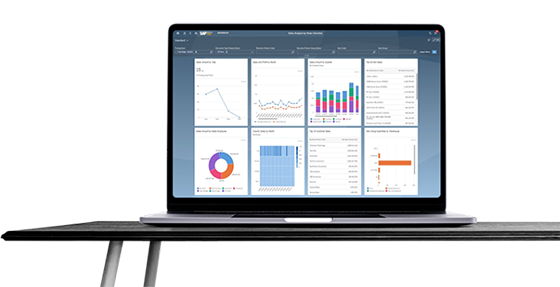
Concluding Remarks
Deciding whether to deploy an ERP for the automotive business or how to get started can be a daunting task. To simplify it and break down the process, you need expert advice of a reputed, official SAP partner. That’s where we come into play. Want to know more about how your automotive business can benefit from an SAP ERP for automotive industry? Contact SAP Silver Touch to book a consultation call today!
FAQs about ERP for automotive industry
More Resources About ERP

SAP Business One provides retailers with an array of benefits. Its advanced features can enhance inventory management, reduce storage issues and stockouts, resulting in better product availability. It can also help retailers give accurate pricing information to customers. This makes SAP B1 an ideal ERP solution for Retail Inventory Management. Cloud-based ERP solutions have the potential to simplify data management by utilizing cloud storage and processing, making it easier for businesses to access and analyze information. This improved accessibility to data could lead to more informed and timely business decisions. However, it is better to remember that the success of any software solution depends on its implementation and how well it aligns with a business’s specific needs. Additionally, cloud-based solutions may not be suitable for companies of all sizes across any sector. In this post, we will dig deep into the core features and benefits of the ERP solution for retail inventory management. Let’s start with an overview of ERP in the Retail Sector.
What is ERP in Retail?
Every day, the retailer has to perform several activities to ensure smooth operations. Retail ERP simplifies and automates these processes. As a real-time ERP solution, it connects and integrates many business processes necessary to manage retail operations effectively. Such software can enable the retailer to efficiently manage front and back office tasks, along with accurate tracking, stock keeping, etc. However, the uses of retail management software are not restricted to stock keeping and monitoring. Most software solutions are integrated with various other tools catering to different business processes.
Functionalities of retail management software include:
- Accounting Software
- Human resource Management Software
- Inventory Management
- Store Management
- Customer Relationship Management (CRM)
- Business Intelligence
- Warehouse and Supply Chain Management
- Point of Sales (POS) Management
All of these functionalities provide a wholesome solution to small-scale retailers who want to adopt technologically advanced solutions but are on a tight budget. Besides these software tools, retail management software can be customized to fit the unique need of organizations.
What is Inventory Management in Retail?
Retail inventory management is at the heart of any successful retail business. It is a mixture of strategically placing the right mix of products in the right place at the right time in the right quantity for customers. The retailer must never have too much or too little merchandise at any given time and must be able to accurately meet customer demands. The whole concept is called retail inventory management, and it has many facets. However, effective retail inventory management benefits customers and helps retailers reduce costs, predict sales and demand patterns, and forecast demand. Retailers can also keep tabs on suppliers and closely monitor the supply chain. At a time when supply chain disruptions are more common than ever, retail inventory management has become an indispensable part of retail operations.
Types of Retail Inventory
A retailer handles different kinds of goods at different stages in the production process. Following are the kinds of inventories that retailers need to monitor based on whether they sell items for resale, produce their own products, or a blend of both.
1. Raw materials
If the retailer manufactures the products from scratch, they will have an inventory of raw materials. These supplies could be produced by a company or obtained from a provider.
2. Work in progress (WIP)
The next kind of inventory comprises semi-finished goods. As the name suggests, these products are not ready for sale and are in the production stage. Few companies procure semi-finished goods from suppliers and make the final arrangements to create a new product. At this stage, the retailer does not want to hold the goods in the line of production. Rather they want to complete the products and start marketing them.
3. Finished goods
Usually, resellers have one type of inventory, which is finished goods. However, these can also be produced by the company. These are marketable and can be sold to customers. They put a lot of emphasis on this stock in the Retail Inventory Management Software strategy.
4. Packaging materials
Although packing materials are not sold, they are a significant part of the inventory. These are used to protect the goods during transportation and sale. There are significant challenges in maintaining, monitoring, and safekeeping each of these inventories, especially if it is done manually.
Challenges arising for not using ERP for Retail Management
 One of the major problems that retailers face today is inventory management. As the supply chain is becoming more complex around the globe, with new players entering the market and new trade routes emerging every day, businesses want to tap into the new markets and capture larger market shares. However, in order to meet the demand, they have to produce and store a large volume of inventory, which, if mishandled or neglected, can lead to huge losses for the organization. Today inventory management has become a more vital business activity than ever before. Therefore, manually managing inventory can be a Himalayan blunder. Here are some of the challenges of manual inventory management.
1. Poor inventory planning
A lot of times, the problems of wastage, understocking, and overstocking arise due to poor inventory planning. The stock levels were not checked properly, so either more or fewer items were produced or ordered. Without an intelligent ERP, it is challenging to keep track. The money spent on inventory is locked in even if the sales are low, which impacts a business’s profitability. Keeping the proper amount of inventory on hand is essential for a business’s financial stability. Overstocking can also cause the accumulation of obsolete stock. However, understocking leads to poor order management and generates customer grievances.
2. Faulty predictions
There are different times during the year when businesses have to predict sales and prepare the stocks, especially during festivities. Such predictions are usually made by studying past and current trends. However, man-made predictions can be erroneous.
3. Paperwork and manual billing
Managing all the inventory management data, purchase orders, and invoices manually is difficult. It takes up a significant amount of productive time, and there is a possibility of leaving out some critical information.
4. Outdated products
As trends alter, products will unavoidably undergo changes. One of the retailers’ challenges is managing and selling outdated or obsolete goods. Maintaining out-of-date inventory can be expensive and take up valuable warehouse storage space.
5. Growing competition
Thanks to technological advancement, starting a retail business has become simpler. But to stay in business and relevant, small businesses face tough competition and are obliged to enlarge their warehouse space to meet the soaring demand. Maintaining product supplies, staying ahead of the competition, and responding to customer complaints and requests are all priorities. However, performing these tasks manually with full accuracy is questionable.
6. Storage facility management
One of the vital parts of inventory management is storage facility management. Developing a plan, selecting ideal locations, and using a manual process will all cost a lot of time and money without an automated inventory system.
7. Lack of a central inventory base
Imaging switching between tabs to check orders, current data, finances, and other details. It can get hectic and cause unfortunate errors. Inventory managers often lose patience, and managing requests and maintaining a record of the items in stock is complicated.
8. Inaccurate data
Data inaccuracy leads to understocking and overstocking. It also creates dissonance amongst the customers. Warehouse and inventory management can give rise to an overwhelming amount of data that is hard to track and report. However, in the digital age, information monitoring should be available with a swipe of the finger instead of skimming through long lists and directories.
9. Product line expansion
As a product line expands and additional warehouses are constructed, effective management of inventory supplies becomes crucial. Trying to maintain the stock list and track orders manually without access to real-time data can result in inadequate management. Inventory managers must evaluate orders, shipping information, and stock levels to allocate supplies properly to the areas with the highest demand.
10. Errors in process management
When a business is small and serves only a few customers, employing basic technology or manually managing inventory may not appear to be a significant challenge. However, as the company expands, the simplest tasks may become overwhelming and require additional help to complete while still fulfilling customer orders. These are some common challenges a retailer encounters today when they do not use an ERP for retail inventory management.
ERP Solution for Retail Inventory Management
Inventory management is a crucial yet painstaking task for retailers. Cloud ERP Software for retail inventory management helps them supervise their stocks per the demand variations. It also reduces wastage with features like batch tracking, among others. Organizations can benefit from a wide range of insights by combining various data sources through ERP systems, including a better understanding of stock-keeping unit (SKU) performance trends. This data can help businesses make informed orders and create more accurate forecasts to meet future demand without maintaining excessive inventories. Using ERP-powered inventory management enhances the efficiency of the supply chain. As a centralized system, it can automate routine tasks such as reordering and eliminate the need for commodities to be processed twice. Additionally, various associates, such as suppliers, may benefit from accss to this system.
Keeps accurate counts
An ERP system is capable of monitoring and reporting various metrics such as average turnover rate, obsolete inventory, excess inventory, cost of goods sold (COGS), shortages, planned replenishment, and other performance indicators.
Pre-built financial tools
An all-encompassing financial management solution is integrated into the retail ERP systems. It consistently drives businesses towards greater organizational efficiency and productivity. It also facilitates continuous growth by providing in-depth business insights, streamlined and systematic operations, and the capability to adhere to risk management and compliance measures.
A better view of the supply chain
Through effective back-end integration, companies can predict shipment delays and avoid unexpected surprises and overpriced components. Linked ERP systems also provide the added benefit of synchronizing order and shipment data.
Gather Historical Data
An ERP system can use its historical record of purchases and sales to make efficient inventory forecasts. This feature comes in handy during seasonal and promotional events and annual orders. The system evaluates the following entries: past sales data spanning two to five years, supplier projections, seasonal and promotional factors, and company constraints such as warehouse capacity limitations.
How to implement ERP Retail Inventory Management?
An ERP software solution for retail inventory management can be launched in three simple steps as follows:
Creating a Record
For creating the record in the ERP system, start by consolidating all relevant operations and information into it. If you are using a legacy system or another software, you can also integrate that with the new ERP and update data. Most ERPs are flexible and allow users to integrate other software and systems. The new ERP shall act as the centralized data platform.
Improving the record
To explore the maximum features of the ERP software solution and improve it by feeding advanced and complex data. You can incorporate more advanced payroll, purchasing, and analytical components. It is essential to store all of these functions in a unified system of records to maximize efficiency.
Adding advanced ERP features
To expand and adapt to shifting market circumstances, leverage the planning, analytics, and quality management features available in an advanced ERP system. Due to their ability to handle numerous tasks and industries, ERP systems are capable of managing multiple aspects of a business. Modern and sophisticated ERP systems are embedded with artificial intelligence, predictive analytics, etc. You must utilize these features to the fullest. If required, customize the ERP for more functionalities.
Important Tips for Finding the Right an ERP Inventory Management System
The critical features of an ERP inventory management system depend on the solution you choose for your business. To determine what features are vital to your customized solution, you can adhere to these five following steps:
Why are you installing the ERP?
Start by considering the goals of your business and stakeholders and analyzing market trends, external opportunities, internal resources, and core strengths are critical steps in developing a business case. Identify the long-term goals and what you want to achieve through the ERP. It will help you determine how the purchase can contribute to your long-term success.
What is the project’s scope?
Once you know the purpose of the ERP, you need to establish the project and feed the required data into the system. Some of the important questions you need to ask while setting up the project include: Which data sources should be merged to provide the ERP inventory management solution with vital KPIs? Which associates, such as suppliers, will want access? You can also make a list of the skill set required to achieve the desired results.
Analyze the ROI
By investing in inventory management technology, businesses can optimize their inventory levels, reduce waste, and streamline operations. Furthermore, advanced inventory management technology can provide valuable insights into consumer behavior and market trends, allowing businesses to make data-driven decisions and improve their offerings to serve their customers better. Identify the ROIs of investing in an ERP.
Create a vendor list
The success of the ERP will also depend on vendor expertise. Create a list of all vendors who meet your criteria and compare them across several parameters. Critical comparison will help you determine and finalize the most suitable vendor. Here is a list of parameters for your reference
- Is the system straightforward to integrate, scalable, and flexible?
- What kind of training is necessary, and will the vendor provide training?
- Does the company offer test versions or free downloads?
- What is the annual or monthly cost of the program?
- What about maintenance?
- How soon will operations begin?
Wait for the results
Once you have developed the roadmap and launched the process, carefully monitor it, and check if you are getting the desired results. In case there is any dissonance or deviation, take immediate corrective actions.
Benefits of ERP for Retail Inventory Management
Now that you know why you need a retail ERP and how you can implement it, it is time to explore the most asked question: How will an ERP for retail inventory management benefit me? There can be several benefits of investing in a retail ERP based on its functionalities and features. 
1. Proper stock keeping
An intelligent ERP lets you leverage its flexible architecture and implement different inventory management strategies within the system. The strategies, along with the ERP, enable your organization to manage the inventory effectively.
2. Omnichannel management
Retailers use several channels of marketing like social media, e-mails, blogs, websites, and offline media to reach out to their targeted customers. An ERP software solution creates a central repository of customer data that the retailer can later use to make data-driven decisions and enhance customer experience.
3. Customer relationship management
Using an ERP software solution in retail enables the enterprise to swiftly respond to customers and curate targeted campaigns using comprehensive customer data. It not only drives engagement but also creates a loyal customer base.
4. Precise demand forecasting
The analytics tools of modern ERP solutions give access to real-time data that lets you study the current trends more accurately. Additionally, it can also process previous data and make proper predictions.
5. Optimize paymPnt gateways
Since most organizations have an online presence and customers are actively shopping online, an optimized payment gateway is a must. An ERP supports various types of payments.
6. Data collection
You no longer have to collect and enter data manually. Online processes will collect customer data and store it in the system.
Using an ERP system for Inventory Management
Efficient management of stock acquisition, sorting, and transfer can be accomplished by automating critical processes within an inventory management ERP system. The system considers the inventory needs of employees, customers, and suppliers to ensure appropriate stock levels are maintained. ERP Inventory Diagram Inventory management through ERP is explained in this diagram. Here you can see every unit has a specific duty. The ERP will assign the tasks to designated individuals. The ERP also acts as a centralized platform that enables communication across all units. It helps them function in concert.  Purchasing and distribution are two vital parts of a retail enterprise that can be easily managed by cloud ERP software. You can also tackle routined merchandising jobs without hitting a slump. Every specialized software program eventually connects with the retail inventory management ERP.
Best Practices for Managing Retail Inventory
Effective retail inventory management is not solely dependent on an ERP. As an organization, there are a few practices you must incorporate to ensure that the strategies and the advanced ERP solutions can work together to benefit your retail organization. Here are five best practices to follow
Identifying the KPIs
Identify and use key performance indicators (KPIs) over predetermined periods to monitor performance and achieve specific objectives. KPIs can be created for inventory carrying costs, inventory turnover rates, order status, tracking, and fill rates, among other items.
Using ABC analysis
It is an inventory organization method where the essential products are categorized as
- A goods requiring frequent replenishment.
- B items being valuable but only required once a month.
- C products being carried in large quantities and having low stock priority.
Tracking Stock Receipts
Avoid the hassles of unrecorded stock, unexpected stock outages, and payments for items not purchased by comparing product counts to purchase orders, checking for shortages or broken goods, updating stock counts in inventory management systems, and communicating with suppliers about any mistakes.
Invest in an Inventory Management system
Investing in an inventory management system or point-of-sale (POS) system can help automate processes, monitor the movement of goods, and improve efficiency, productivity, and accuracy.
Calculate Minimum Stock Threshold and Maintain Residual Stock
Calculating the minimum stock threshold constraints is important for satisfying demand and reducing fulfillment delays. Residual inventory can be managed effectively by using season codes and style numbers in inventory management systems.
Is it safe to selecting ERP for retail inventory management?
How can Silver Touch help with Retail Inventory Management?
With our extensive domain expertise and vast industry experience, Silver Touch has worked with several brands from different industries and assisted them in successfully implementing retail ERP software solutions and streamlining their warehouse and inventory management. Get in touch with us today to book a demo and see our retail ERP experts in action.
Concluding lines
Inventory management is a key function in the retail industry. However, manual operations are often riddled with error and lead to faulty predictions and stock management. There are several challenges to not using an ERP for retail inventory management. However, an intelligent ERP with advanced technological features can remediate those roadblocks. These software solutions are easy to implement. Following the best practices, retailers can cut costs, optimize operations and increase profitability. ERP for retail inventory management has been well-received by future-oriented retailers who want to pave the way toward long-term success and embrace digital transformation.
FAQs about Retail Inventory Management
You may also like this
- SAP Inventory Management: Ultimate Guide of Pricing, Benefits & Features
- Better Bill of Materials (BOM) in SAP Business One
- SAP Business One Price in India – A Detailed Breakdown of SAP B1 Cost
- SAP Workflow Management for Business Process – Features & Advantages
- The Complete Guide to SAP Business One and How it Helps Retailers

SAP Warehouse management system can be considered one of the priorities for modern enterprises. Entrepreneurs focus on warehouse management in this post-pandemic age for two reasons- One, it gives real-time visibility about the movement and transit, and Two, it ensures that the supply chain and inventory are managed properly even with limited resources.
But, here is a twist in the tale. It is almost impossible to achieve both these objectives in the absence of an advanced warehouse management system. There, the SAP warehouse management system comes into the picture. With advanced features and seamless functionality, the SAP Business One warehouse management software can meet complex business requirements easily.
In this post, we will dig deep into the reasons to choose the SAP ERP warehouse management module. But, before moving ahead, let’s have a brief introduction to SAP warehouse management and understand the key challenges of modern enterprises that a robust warehouse management system can address.
What is SAP Warehouse Management System?
Let’s start with an interesting fact. SAP ERP will streamline logistics in retail and pharma warehouses around the world by 2025. Powered by the advanced technology of SAP, this warehouse management module makes various processes more efficient and consistent at the warehouse. You can achieve productivity goals with a robust and reliable SAP warehouse management system.
Simply put, the SAP warehouse management module is an ERP software designed to simplify and control all the processes related to the warehouse. It ensures efficient operations by enabling the corporate users to manage all the aspects of the warehouse. Whether it is monitoring inventory differences or controlling perishable or dangerous goods, SAP warehouse management can assist enterprises.
SAP warehouse module also facilitates you to transfer the stock and handle the receipts of goods every day. You can monitor the inbound and outbound movement of goods and automate various time-taking processes in your warehouse. Inventory management and supply chain management can be managed efficiently and your organization can get the advantage of higher accuracy.
What is the SAP Warehouse Management Module?
SAP Warehouse Management (WM) is an important module to manage warehouses and optimize inventory levels. Developed and supported by SAP, a German BI tools and solutions provider, this module provides users with warehouse management functionality. The Warehousing management module has features including bin management, billing, picklist management, and inward/outward process management to manage all warehouse-related operations efficiently.
What are the Different Types of Warehouse Management Systems?
Typically, warehouse management systems are of four types. They offer a range of benefits including increased productivity and reduced operational expenses. Companies can easily take control of logistics, supply chain, and inventory with WMS software. Also, WMS optimizes inventory transportation through tracking functionality. Here are four main types of wms systems.
1. Standalone
This type has warehouse management features and such a system can be combined with existing or future solutions. Standalone WMS has no functions related to the supply chain and most companies purchase it to meet warehouse management requirements with the best-of-breed WMS. It also offers features like barcode scanning, cycle counting, putaway, etc.
2. Integrated with ERP
ERP remains the most useful option for modern businesses to increase efficiency and productivity. Though integrated ERP systems have some built-in warehousing features, these systems do not manage the entire process of warehouses. You can integrate a WMS with ERP. It costs more but this integration performs multiple operations and offers a centralized platform.
3. Supply Chain Modules
Supply chain management modules are useful in managing everything ranging from vendor relationships to business processes. These modules are designed to bring automation to inventory management, product cycles, and material sourcing. They give 3PL (third-party logistics) firms the chance to leverage the benefits of supply chain management
4. Cloud-Based System
When it comes to maintenance costs and installation, Recent developments with modern WMS have included scalable cloud pricing, with some offering per-user monthly rates, making them affordable for both SMEs and enterprises. The industry standard is now set by a cloud-based and AI-powered WMS that offers smart inventory planning, predictive analytics, and flawless IoT integration. Startups and smaller businesses can also leverage the benefits of this system thanks to subscription-based options.
Industry Challenges of Warehouse Management System
In 2025, there will be issues like labour gaps, fluctuation in demand, and the need for instantaneous information that will fuel businesses to pursue automation-centric approaches powered by ERP. A warehouse management system with the necessary features and seamless performance can ensure sustainability for your warehouse and business alike. You can easily overcome some of the common challenges that occur frequently in the warehouse with the help of the SAP warehouse management system. Here are some major warehouse management challenges that can affect your business over the period.

Excessive Stock
It is difficult to monitor the stock movement in absence of a warehouse management system. As a result, companies may give orders randomly for items that are not moved quickly. Also, poor inventory management can bring problems in finding the real-time situation of stock. Altogether, companies may face troubles related to excessive stock.
Low Traceability
Traditional paper-based processes including manual data entries and passing the same ticket frequently at the warehouse can reduce visibility and remain time-consuming. Also, in the post-pandemic age, many companies have to manage with limited resources. In such a scenario, manual warehouse processes can reduce the traceability of items.
Lack of Space
The overstock situation can cause a lack of space in your warehouse for storing other necessary goods. Along with this, warehouse setup mistakes and inaccurate data regarding the fast-moving items can create trouble and waste your staff’s productive time. All such scenarios have a direct impact on your business profitability and efficiency.
Improper Time Management
Official research has shown that 50 percent of the picker’s time is spent in movement. Therefore, it is necessary to establish an optimized way that minimizes movement and time consumption. Without a feature-rich warehouse management module, companies cannot save time in warehouse movement and they have to face its consequences.
Repetitive Procedures
Manual and repetitive procedures lead to excessive stock in your warehouse. Such procedures not only take more time for employees but also increase the chances of human errors. It can result in reduced efficiency and accuracy in order fulfillment management. Shortage and overstock remain common difficulties due to repetitive processes.
Inaccurate Inventory Measurement
Inventory management plays a vital role in managing the supply chain. However, companies that have no warehouse management systems in place have to compromise on monitoring and measurement of inventory. Such an inaccurate inventory measurement can bring the risk related to damaged products and excessive stock.
Damaged Products
Improper inventory management leads to damaged products and other issues. Companies face losses due to such products because they cannot sell or supply them to anyone. Inaccurate warehouse management causes more instances of damaged goods.
Failure in Meeting Demands
Some seasonal products need special attention as they are moving fast during the particular period. However, if there is a lack of a warehouse management system, many businesses fail to meet the demand for such products.
Are you Looking for Professional ERP Software to Help Your Business?
SAP Warehouse Management System Features
SAP-based warehouse management system enables you to experience the power of SAP Business One. As an advanced ERP solution for small and mid-sized businesses, SAP Business One (SAP B1) can optimize efficiency and productivity. It also offers more control over warehouse data and ordering systems while enabling users to monitor and record stock movements in real time. Here are the key features of SAP warehouse management.

Improved Goods Receipt and Better Control
It enables users to track inventory transfers, record receipts, and other stock-related issues easily. Powered by SAP B1, this feature offers more control over cycle counts and consignments. Another necessary feature is dropshipping management which takes care of the logistic part.
Production & Material Requirement Planning
SAP Business One facilitates users to issue and release orders for production. You can also keep multiple bills of materials (BOMs) while maintaining preset prices to provide your global customer base with better services. Altogether, you can plan for production and material requirements in advance.
Real-Time Reporting
This is one of the most noteworthy features of the SAP Business One warehouse management system. SAP Business One offers accurate reports with real-time data. This information keeps on updating continuously and users can access it in various formats. You can make decisions related to warehouse movements with this feature.
Warehouse and Inventory Management
The warehouse management module has dedicated features for warehouse and inventory management. These features enable companies to maintain all their master data and costs in multiple currencies for various products or goods. As a result, you can easily manage orders and supplies.
Mobility and Data Security
It enables companies to keep a tab on inventory at every warehouse irrespective of geographical distance. You can also access the movement history and real-time stock status from a mobile device through the mobility feature. Companies can also restrict access to this information for ensuring data security.
QC (Quality Control) Management
This feature enables the company supervisor to inspect various physical aspects of the vehicle after the material is loaded from the supplier side. Some factors like cleanliness, vehicle temperature, and start or finish time can be monitored through this feature. QC Management feature is one of the top features of SAP Business One software.
Bin and Database Management
It is easy to assign a separate storage bin to different warehouses based on the storage type and location. You can also manage the storage facility based on the maximum weight, fire containment section, and total capacity. Also, the SAP B1 warehouse management module can be easily integrated with a centralized database.
Purchase Agreement
Purchase and sales agreement features are useful for managing goods effectively on the basis of item type, purchase order, and sales agreement for warehouse and bin. These features have B2C and B2B functionalities so that companies can easily manage the entire supply chain and inventory.
You May Also Like: Role of SAP ERP Software in in Supply Chain Management
What are Benefits of SAP Warehouse Management?
SAP Warehouse management system offers many benefits to companies that have warehouses at distant locations and also companies that provide warehouse facilities to other organizations. Here are some of the major benefits of SAP warehouse management. Today’s SAP WMS solutions come equipped with AI for demand forecasting and RPA (Robotic Process Automation) for quicker inventory cycle times.

Improved Processes
SAP warehouse management system enables users to employ barcode scanners for improving inventory management, tracking materials, and fulfilling customer orders on time. The module can check material availability in real-time, pre-pick, accept, and distribute incoming materials.
More Accuracy
It is possible to monitor all goods as they move in, out, or remain in the warehouse. Users can get up-to-date stock information while preventing errors that lead to understock or overstock conditions. Also, you can reduce picking and packing time with the help of accurate shipping locations.
Reduced Costs
SAP B1-powered warehouse management module can bring instant inventory visibility and offer physical control over different activities like stock movement and supply. It can assist companies to optimize the process and reduce operational costs significantly. Also, businesses can identify problem areas in advance and fix them before they convert into costly issues.
Boost Productivity
You can gradually improve the efficiency of the warehouse staff by updating inventory information in real time. They can easily manage daily operations, scan barcodes, track inbound and outbound inventory, and get reports as and when necessary. It results in increased productivity.
Enhanced Monitoring
Thanks to real-time and accurate monitoring, companies can reduce human errors during order execution. It is also possible to get effective inventory control and management regardless of the number of items.
SAP WMS Price
SAP ERP Warehouse Management System (WMS) not only offers complete control over warehouse operations but assists you to keep up with the ever-changing demands of customers without increasing expenses. SAP Extended Warehouse Management (EWM) for SAP S/4HANA Cloud solution starts from USD 4354 per 5000 items a month.
A reputed SAP Partner can integrate add-ons to make your EWM solution more powerful. Its cost starts from USD 16, 016 per 5000 items a month.
You May Also Like: A Detailed About SAP Business One Price
What is Extended Warehouse Management in SAP?
SAP Extended Warehouse Management (EWM) is a warehouse management module that is included in the Supply Chain Management (SCM) solution package of SAP. It is designed to offer flexibility and automated support to manage the stock movements in the warehouse while handling the entire process from goods to picking, packing, and distribution.
SAP EWM is an advanced version of SAP Warehouse Management (WM). SAP has announced that it will end all sorts of support in SAP WM in 2025 due to the increasing demand for warehouses. In other words, companies need to opt for the SAP EWM module instead of SAP WM from now onward. Let’s go through the basic differences between advanced SAP EWM and basic SAP WM.
What are the Differences Between SAP EWM and SAP WM?
We will see the main points that differentiate SAP EWM and SAP WM from different aspects. Hope the following table will help you
| Aspect | SAP EWM | SAP WM |
|---|---|---|
| Definition | It focuses on the logistics part and it is available without the SCM (Supply Chain Management). SAP EWM has all standard warehouse management applications. | It is a highly efficient tool to manage the stock available in the database and make any necessary changes in it. SAP WM can also assist users to manage operational tasks in their warehouses. |
| Flexibility | It offers a higher level of flexibility in terms of the design of your warehouse and its processes. | It is not much flexible in the design of the warehouse and its processes. |
| Users | Accenture, YASH Technologies, and ICS Consultancy Services are some of the companies that aggressively use SAP EWM. | Tech Data and Luxottica Groups are a few companies that use SAP WMS. |
| Disadvantages | It interfaces with the automation and field devices thereby remaining slightly unsuitable for them. | It requires expertise for configuring and incorrect processing can cause complicated issues. |
Why You Should Adopt SAP ERP for Warehouse Management
When it comes to efficient monitoring at the warehouse, paperless management of processes, and increasing efficiency, SAP warehouse management remains the preferred choice for companies. It drives productivity by bringing automation into several processes related to the warehouse. With the ease of use and seamless customization to meet ever-changing requirements, the SAP Warehouse Management system is the right choice for thriving enterprises.
Why Silver Touch for SAP Warehouse Management Solutions
Silver Touch offer a web-based Warehouse Management Software (WMS) that is developed specifically for SAP Business One. It enables you to make the most of your investment through a comprehensive and feature-rich warehousing solution suite. Improved efficiency and reduced costs are some of the top benefits of using our warehouse management software.
Our WMS has many capabilities like inventory and location management, stock-based picking, internal stock transfer, pick note assignment, outbound, inventory counting, replenishment, etc. You can get all the warehouse-related operations updated in real-time in SAP Business One. Simply visit our website or send us an inquiry at sap@silvertouch.com to know more about our warehouse management.
Conclusion: SAP WMS
After looking at the warehouse management system features and benefits, you will certainly opt for SAP Warehouse Management System for your growing business. We hope that this detailed guide will give the answer to the question- Why should you choose SAP for warehouse management? Forward-looking entrepreneurs have already adopted SAP WMS to meet complex requirements and increase productivity amid changing business needs. The time is just right for you to integrate SAP EWM into your business model.
Talk with our SAP ERP Consultant and Transform your Business to Achieve Business Goals
FAQs About SAP Warehouse Management System
SAP Extended Warehouse Management (EWM) is useful in managing inventory in the warehouse and monitoring stock movement. With the SAP warehouse management system, you can control inbound and outbound processes in the warehouse.
SAP Extended Warehouse Management (EWM) is an advanced version of SAP WM (Warehouse Management). It is a part of SAP AG’s SCM (Supply Chain Management) suite of solutions. As an integrated software platform, SAP EWM offers automated support for managing inventory and processing the stock’s movement in the warehouse.
Key features of SAP warehouse management include
- Real-time Reporting
- Production & Material Requirement Planning
- Warehouse and Inventory Management
- Quality Control Management
- Purchase Agreement
- Mobility and Database Management
Warehouse management systems are available in four types- Standalone, Supply Chain modules, Cloud-based, and Integrated with ERP. Companies can purchase systems from any of these types as per their requirements.
SAP warehouse management offers many benefits to companies. Some of them are-
- Improved Processes
- Higher Accuracy
- Reduced Costs
- Enhanced Monitoring
- Increased Productivity
More Resources About SAP ERP

Custom ERP software can streamline various processes and increase the overall productivity of enterprises globally. AI, on the other hand, is a revolutionary technology that can bring automation and shape the future of modern enterprises. How about incorporating AI in SAP ERP systems? Well, SAP does this expertly in its SAP AI Business Services.
SAP, a reputed and reliable ERP software maker, has successfully integrated AI into various business solutions. In this article, we will discuss the types and benefits of SAP AI solutions. We will also see some effective strategies to optimize your investment in SAP AI Business Services. But, before moving ahead, let’s understand the role of AI in your business and SAP Artificial Intelligence or SAP AI.
How Artificial Intelligence Can Revolutionize Your Business
AI can play a vital role in revolutionizing your business. Here we mention five top ways through which AI technology can take your business to a new level by bringing revolutionary changes in the model.
Enhanced Customer Experience
AI-powered chatbots and virtual assistants provide round-the-clock support, resolve queries and give personalized recommendations for increased customer satisfaction and loyalty.
More Operational Efficiency
AI-driven solutions can streamline processes like inventory management and customer service, saving costs and increasing productivity by freeing up employees for higher-value tasks.
Better Decision-making
SAP AI Business Services offers AI-based analytics that can identify patterns and trends for data-driven decision-making in real time, giving businesses a competitive advantage.
New Business Models
AI unlocks new revenue streams by identifying opportunities for upselling, cross-selling, and developing products/services that meet customer needs, resulting in increased revenue.
Increased Cybersecurity
AI-powered cybersecurity solutions detect and prevent cyberattacks early, thereby protecting sensitive data and building trust with customers for long-term growth.
Entrepreneurs can invest in AI-powered ERP software to leverage the potential of this revolutionary technology. An advanced SAP AI solution can be your preferred option for making the most of AI technology.
Here is a brief on SAP Artificial Intelligence (SAP AI).
What is SAP Artificial Intelligence?
SAP AI or SAP Artificial Intelligence solutions have built-in AI for addressing complex business requirements and increasing the company’s efficiency. AI solutions from SAP cover core business processes across different departments. They connect supply chain, procurement, finance, sales, marketing, IT, and human resources department to benefit modern enterprises.
SAP AI Core, SAP AI Launchpad, and SAP Conversational AI are enterprise-grade AI solutions from SAP. Apart from these solutions, SAP offers a rich portfolio of strategic services and applications which is known as SAP AI Business Services. Altogether, companies can leverage the advantage of AI and other business-related technologies through various AI solutions from SAP. We will now see the crucial strategies to optimize the SAP AI investment.
Optimizing Your SAP AI Investment Crucial Strategies
AI is getting mainstream across different industry sectors rapidly. Education, retail, and healthcare sectors have emerged as big beneficiaries of AI. However, it is essential to implement some strategies to gain the advantage of SAP AI investment for your company.
Efficiency Strategy
This strategy focuses on optimizing activities through automation. By leveraging AI, businesses can streamline their processes, eliminate manual tasks, and achieve higher levels of efficiency. Automation can reduce manual errors and save effort.
Effectiveness Strategy
This strategy aims to facilitate seamless activities and enhance communication. AI-powered tools and systems enable smoother interactions between customers and employees. This leads to improved collaboration and faster problem-solving across different departments.
Expert Strategy
With this strategy, AI-powered analytics and real-time insights provide businesses with valuable data for making informed decisions and make accurate predictions. By analysing vast amounts of data in real time, AI can identify patterns, trends, and potential risks.
Innovation Strategy
This strategy leverages AI to enable creativity and foster innovation. AI technologies, such as machine learning and natural language processing, can generate new ideas, assist in product development, and uncover untapped opportunities.
As an entrepreneur, you can implement the right strategy for your business processes to get success in your AI journey. Implementation of the right SAP AI solution can help you leverage various business benefits.
What are the Benefits of SAP Artificial intelligence?
Following are some of the key benefits of SAP Artificial Intelligence solutions-

Real-time Decisions
SAP AI solutions provide intelligent insights and analytics that enable data-driven decision-making. Businesses can uncover valuable patterns, trends, and correlations within their data by leveraging ML and predictive analytics.
Automation Advantage
SAP AI solutions automate repetitive and mundane tasks, increasing operational efficiency and freeing up employees to focus on more valuable and strategic activities. Through automation, businesses can streamline processes, reduce errors, and achieve more productivity.
Enhanced Experience
Businesses can deliver personalized and tailored experiences to their customers. AI-powered chatbots and virtual assistants can provide 24×7 support, resolving customer queries in real time. This leads to improved customer satisfaction, loyalty, and ultimately, growth.
Optimized Management
AI-driven ERP software can help businesses optimize their resource allocation and utilization. By analysing data and patterns, businesses can better forecast demand, manage inventory, and allocate resources efficiently, leading to cost savings and improved resource planning.
Enhanced Security
AI solutions from SAP contribute to improved cybersecurity and risk management. AI-powered algorithms can detect and prevent security breaches. They can identify anomalies in real-time, and proactively mitigate risks. This helps businesses protect their confidential information.
Competitive Edge
SAP AI solutions enable businesses to innovate and stay ahead of the competition. By leveraging AI technologies, such as natural language processing and machine learning, businesses can develop new products, optimize processes, and identify untapped market opportunities.
Companies can drive growth and bring innovation across various operations by leveraging the benefits of AI solutions from SAP.
You May Also Like –
AI in SAP ERP: Progress and Transformations for Enterprises
Types of SAP Artificial Intelligence
SAP offers a range of AI-driven solutions to make decisions confidently, automate repetitive tasks effectively, and deliver better experiences easily. Let’s have a brief on different types of AI solutions from SAP.
SAP AI Business Services
It is a portfolio of strategic services and applications useful for automating and optimizing various corporate activities. SAP AI Business Services can provide companies with an intelligent suite to enhance the user experience.
SAP AI Launchpad
It is a multi-tenant SaaS (Software as a Service) application in the SAP Business Technology platform. As a central vehicle for SAP teams, customers, partners, and stakeholders, SAP AI Launchpad can effectively manage AI scenarios.
SAP AI Core
This service is a part of the SAP Business Technology Platform that can handle the execution and operations of all AI assets. SAP AI Core can manage AI assets in a standard and scalable way.
SAP Conversational AI
It is a powerful, end-to-end chatbot platform for enterprise utility. Companies can train, build and connect chatbots to automate processes and enhance the employee experience using SAP Conversational AI.
SAP AI or business AI solutions from SAP can handle core business processes efficiently. These solutions are useful in supply chain management, procurement, sales & marketing, finance, IT, and human resources. Accenture, Hamburg, and Telefonica are some of the big names that have successfully implemented SAP AI solutions in their business systems.
Here we mention some important tips to leverage SAP AI for increasing the productivity and efficiency of your company.
How to Leverage SAP AI to Increase Efficiency & Productivity?
Companies, irrespective of their business models and sizes, can leverage SAP AI solutions for increasing efficiency and productivity. Here we mention some of the top ways to gain the business benefits of SAP AI Business Services.
Repetitive Task Automation
AI solutions from SAP can automate repetitive and rule-based tasks that consume significant time and resources. By automating these tasks, employees can focus on more value-added activities, leading to improved productivity and efficiency.
Effective Resource Allocation
SAP AI solutions can help companies determine the optimal allocation of staff, equipment, and materials by analysing data. It further leads companies to improve efficiency and productivity in various business processes.
Intelligent Insights in Real-time
SAP AI solutions provide intelligent insights in real-time by leveraging machine learning algorithms. Companies can extract valuable insights from large volumes of data, enabling better decision-making across various functions, such as sales, marketing, and finance.
Accurate Demand Forecasting
SAP AI Business Services can analyse historical and real-time data to forecast demand accurately. By leveraging these insights, companies can optimize inventory management, production planning, and supply chain operations.
Personalized Customer Experience
SAP AI enables businesses to personalize customer experiences by analysing customer data and behaviour. By leveraging AI-driven insights, companies can deliver tailored recommendations, personalized offers, and targeted marketing campaigns.
Streamlined Business Processes
You can streamline business processes by automating workflows, eliminating manual interventions, and reducing errors. Such streamlined workflows can pave the way to growth for your company in the future.
Select SAP AI Business Services for advance technology

Concluding Lines
SAP AI solutions are specifically designed by keeping complex business processes in mind. Be it SAP AI Core, SAP AI Launchpad, or SAP AI Business Services, all the AI-powered solutions are highly relevant, trusted, and robust to manage various processes efficiently. You can leverage the benefits of AI solutions from SAP by implementing the right strategy into your company’s business system.
Silver Touch is a leading name in the domain of ERP solutions in India. As an official SAP Partner, we offer a custom SAP Business One solution in Ahmedabad and other parts of India with the necessary add-ons. If you are in search of a feature-rich ERP solution in India, you are at the right place as we integrate top-notch software business systems of any scale. Want to know more about our services? Reach us by dropping an email at sap@silvertouch.com.